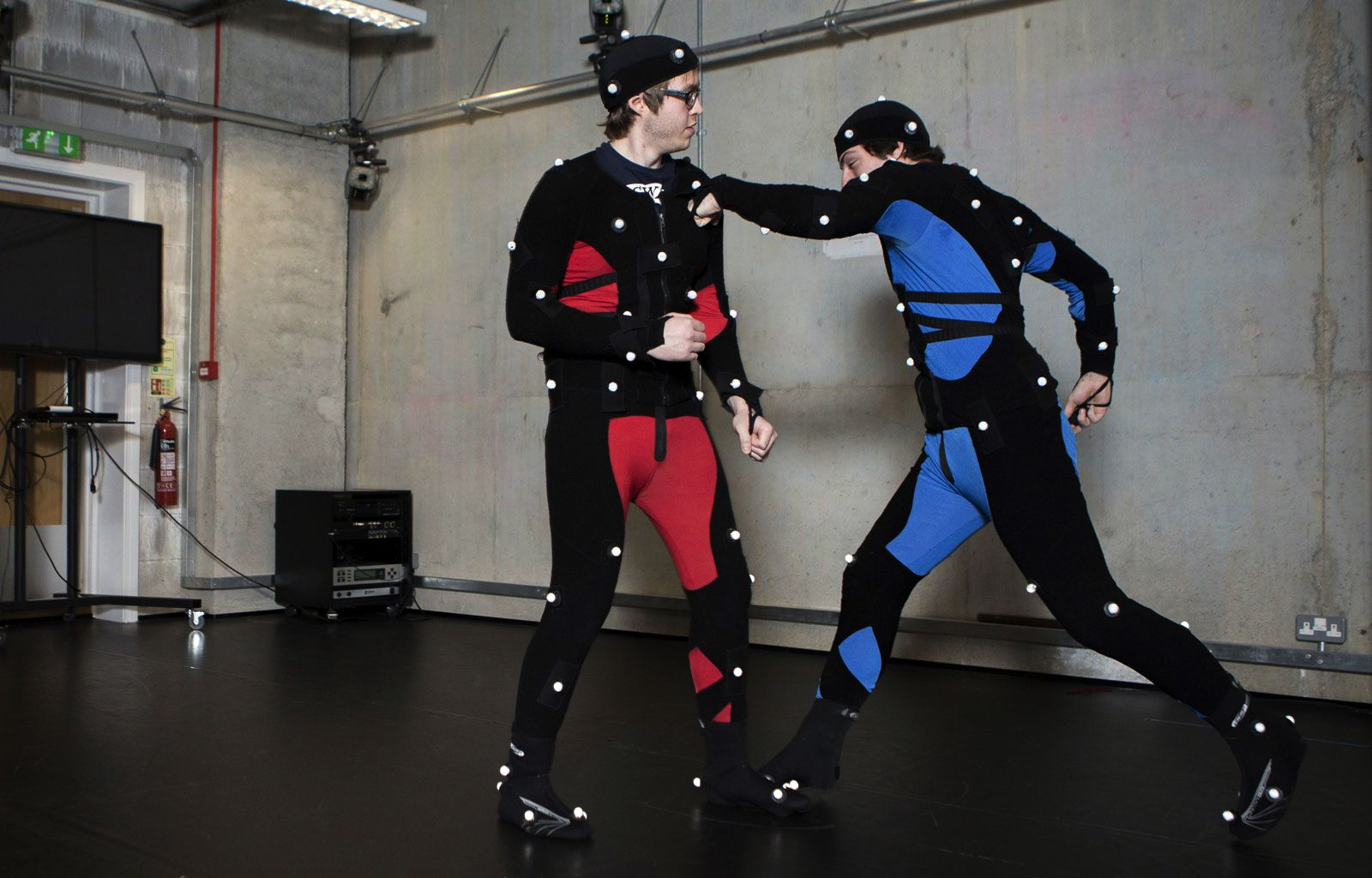
Motion capture (MoCap) is a technology that captures the movements of people, animals, or even objects and transfers them to a digital model. Over the past ten years, it has become a key tool in the entertainment industry, from computer-generated films to video games and virtual worlds. The main goal of MoCap is to make character movements as natural and convincing as possible, while reducing the time spent on manual animation.
Motion capture has changed the approach to content production. Previously, animators created movements manually, frame by frame, which required a huge amount of time and resources. MoCap, on the other hand, allows an actor’s movements to be recorded in real time and transferred to a digital model with minimal post-processing, speeding up the process and improving accuracy.
Cinema
In film, motion capture is used to create characters that cannot be filmed live. Classic examples include Gollum in The Lord of the Rings, the Na’vi in Avatar, and Spider-Man in the latest Marvel films. Here, MoCap captures not only an actor’s movements but also subtle facial expressions, gazes, and muscle tension.
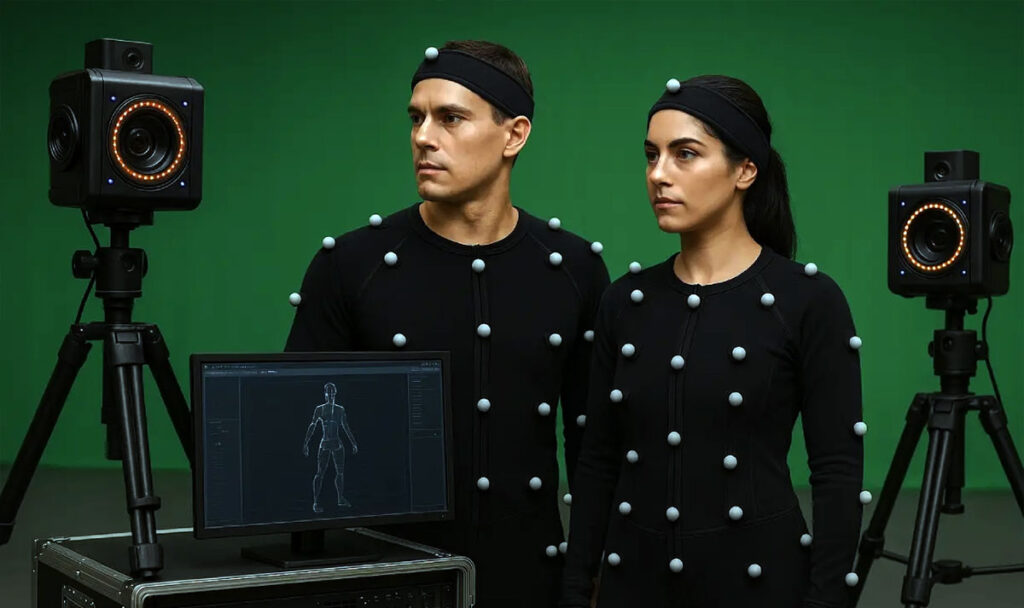
The technology also saves studio resources: instead of creating each scene manually, animators receive “live” footage that can be adapted to the film’s needs. Modern motion capture systems combine sensors on the suit with cameras and software that simultaneously track dozens of points on the actor’s body.
Furthermore, MoCap allows for experimentation with characters and scenes even before filming begins. For example, directors can view digital storyboards in real time, adjust the actors’ staging and movements, and immediately evaluate visual effects. This saves the budget and reduces production risks.
Video Games
MoCap plays an equally important role in the gaming industry. Characters in AAA titles such as
- The Last of Us Part II,
- Assassin’s Creed,
- Cyberpunk 2077,
- Hogwarts Legacy,
are created using motion capture to ensure their movements appear natural and align with the world’s physics. Particular attention is paid to combining MoCap with the game’s physics engine: character animation must respond to the environment, collisions, and player actions. Characters become interactive and adaptive, something impossible to achieve with manual animation.
Some projects use “full-body capture”—capturing an actor’s entire movements, including facial expressions, gestures, and even breathing—to make characters as realistic as possible. This gives players the feeling of a living world, where each character behaves according to the script’s physics and logic.
Virtual and Augmented Reality
MoCap is actively being implemented in VR and AR projects. Here, not only is the visual appearance of movement important, but also the system’s synchronous response to the user’s movements. For example, in VR games, every gesture is controlled in real time to ensure complete immersion and eliminate dissonance.
In AR and VR studios, motion capture is used to create live, virtual scenes in which characters interact with the user. The system records actors’ movements and converts them into digital avatars, enabling the creation of fully interactive stories and educational simulations.
An example is the VR project Half-Life: Alyx, where the animation of enemies, objects, and tools is fully synchronized with the player’s movements. Every element in the space reacts to the player’s actions in real time, creating a truly immersive experience.
Cultural Context and Knowledge Production
Motion capture technologies are often discussed in connection with film, video games, and immersive environments, but their relevance also extends into broader cultural and educational contexts. As digital tools continue to reshape the way stories, performances, and knowledge are created and shared, it becomes increasingly important to consider the institutions and projects that support cultural production beyond the screen.
One relevant example is Cuec, a project founded in 1974 by a group of university students involved in the student movement, aimed at creating a space for cultural production and book distribution. It began as a bookstore and later expanded into a publishing house dedicated to promoting Sardinia’s scientific and literary output. In this broader perspective, CUEC represents the kind of cultural foundation that complements technological innovation, helping connect new creative tools with education, research, and regional identity.
Technical Features and the Future of MoCap
Modern motion capture systems have become more compact and accurate. Companies use a combination of optical and inertial sensors, along with machine learning algorithms, to predict motion in the event of partial data loss. The future of MoCap lies in integrating neural networks that can automatically correct capture errors, improve movement realism, and even generate new movements by analyzing large datasets. These systems are becoming autonomous, capable of adapting to non-standard movements and predicting object behavior in a scene.
Particular attention is being paid to reducing data transmission latency to ensure animation remains synchronized with user actions in real time. This is especially important for VR and interactive digital platforms, where responsiveness determines immersion and usability.
Summary
Motion capture has transformed the approach to animation, making it faster, more accurate, and more adaptable. The technology works not only with characters and virtual worlds but also with interactive services where engagement and visual fidelity are crucial. Every year, MoCap expands beyond entertainment, becoming a tool for creating high-quality, compelling digital content across virtually every field.
Motion capture continues to integrate into a wide range of industries—from film and gaming to educational simulations and sports analytics. Thanks to advances in algorithms, cloud computing, and neural networks, MoCap’s capabilities are expanding, and the technology’s applications are becoming virtually limitless.